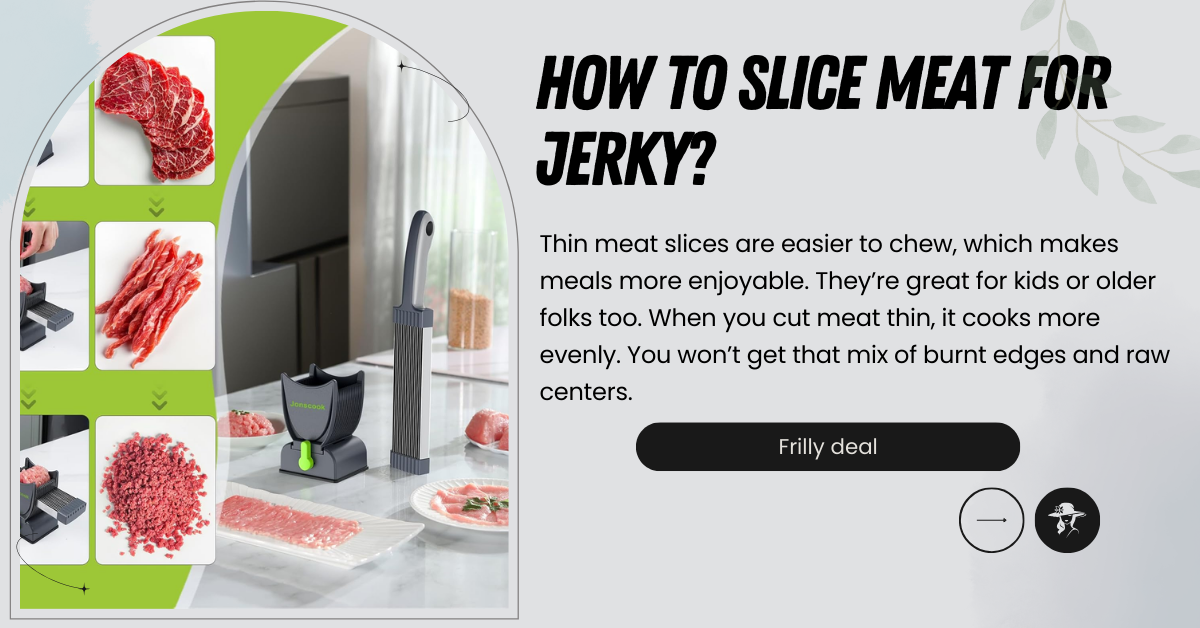
Getting the perfect jerky starts with how you cut your meat. Chilling it first helps you slice thin, even pieces that dry just right. Removing fat and picking lean cuts means better flavor and longer shelf life.
Cutting across or along the muscle fibers changes the chewiness, so choose what suits your taste. Using a sharp knife on a steady board keeps the process safe and smooth, like a meat slicer.
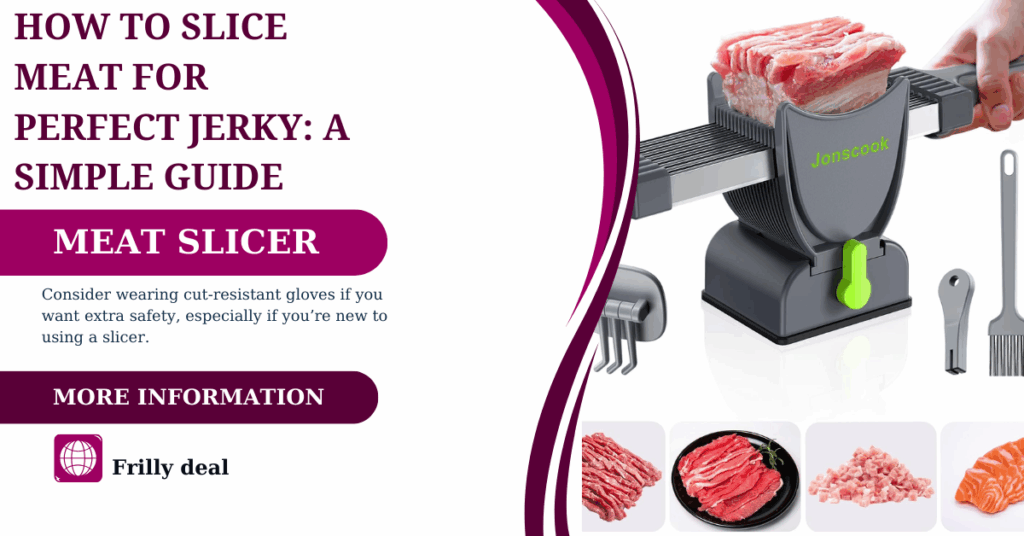
For consistent, professional results, genuine meat slicers for jerky can make a real difference. These slicers help you get uniform thickness, which is key to even drying and perfect texture every time.
Master these steps, and you’re on your way to jerky that’s truly next-level- let’s dive into how to do it right.
How to Slice Meat for Perfect Jerky: A Simple Guide
Love homemade jerky? The secret to great jerky starts long before it hits the dehydrator. How you slice the meat plays a big role in the final product’s texture, flavor, and drying time.
Cutting your meat the right way helps it dry evenly and soak up marinades better. This guide will show you the simple steps to slice meat like a pro.
Using a meat slicer was another suggestion I made:
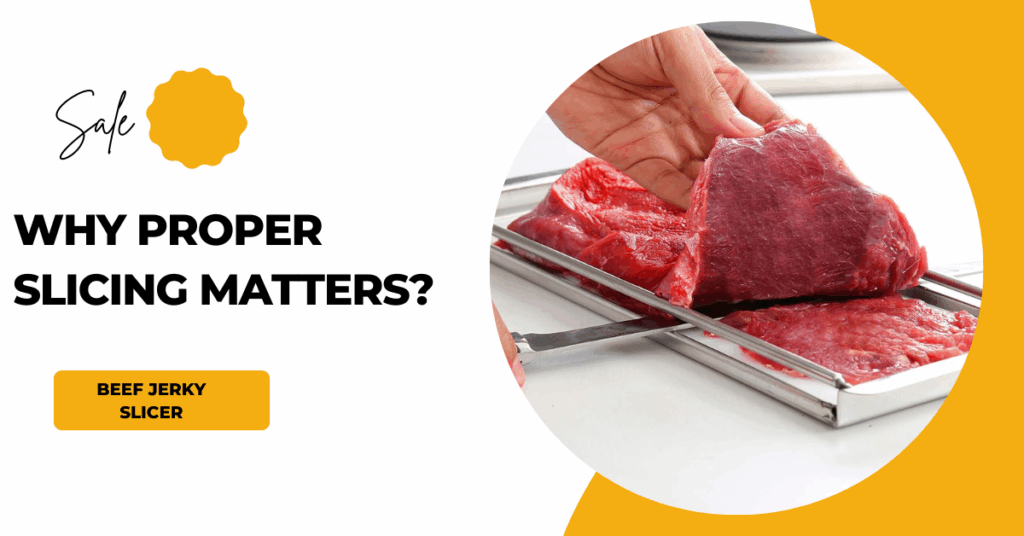
Why Proper Slicing Matters?
Slicing affects jerky in three key ways:
- Texture: Thin, even slices help create jerky that’s tender or chewy, depending on how you cut it. Uneven pieces can dry differently, leaving some parts tough and others soft.
- Drying Time: Uniform thickness means all slices dry at the same pace. This avoids some strips getting overdone while others stay moist, which can lead to spoilage.
- Flavor Absorption: When slices are consistent, marinades soak in evenly, giving every bite a perfect taste.
Preparing Your Meat for Slicing
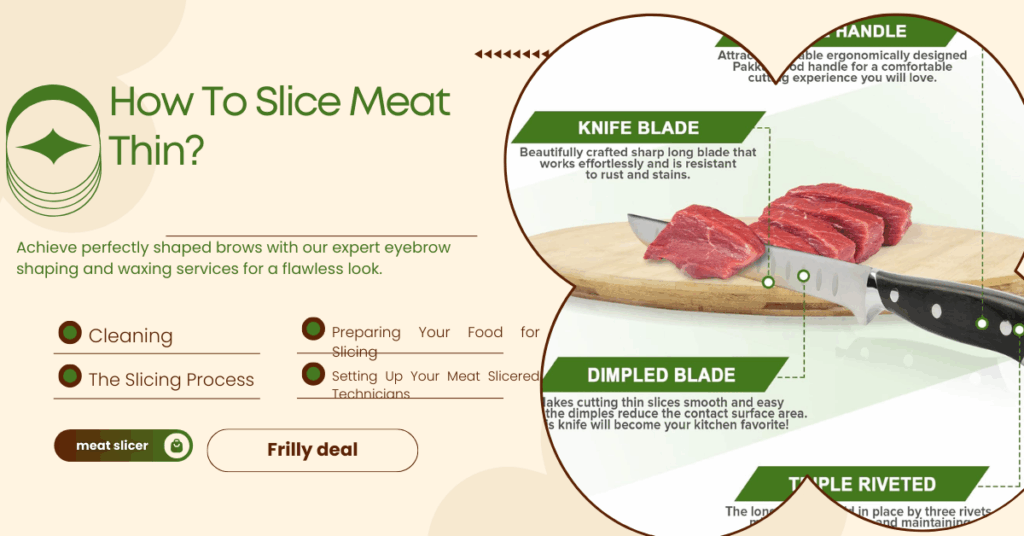
Before slicing, it’s best to chill your meat. Put it in the freezer for 1 to 2 hours until it feels firm but not frozen solid. This makes cutting thin slices easier and safer.
Next, trim off all fat and silver skin. Fat doesn’t dry well and can turn rancid, ruining your jerky’s flavor and shelf life.
Choose lean cuts like top round, bottom round, or flank steak. These have less fat and work well for jerky.
The Art of the Slice: Grain and Thickness
- Understanding the Grain: The grain is the direction of the muscle fibers in the meat. It matters for texture.
- Slicing Against the Grain: Cutting across the fibers breaks them up, making the jerky softer and easier to chew. Most people prefer this for homemade jerky.
- Slicing With the Grain: Cutting parallel to the fibers keeps them whole. This gives a chewier jerky, which some people like for its toughness.
- Ideal Thickness: Aim for slices about 1/8 to 1/4 inch thick. Keeping slices the same thickness helps them dry evenly.
- Tools for the Job: A sharp chef’s or slicing knife works well for clean cuts. But if you want speed and precision, especially for big batches, the best meat slicer can make prep faster.
Quick Tips & Safety
Always slice on a stable cutting board to avoid slips. Keep your fingers clear of the blade. A sharp knife is safer than a dull one because it cuts smoothly without forcing. Take your time and slice carefully for the best results.